
A glass railing keeps a staircase, loft, deck, terrace or pool area open to light and to the view. The way the glass is held, the glass itself and the finishing details are chosen together for each project. This guide explains those choices, so you know what to look at before we visit.
Three ways to hold the glass
Base shoe
The glass sits in a continuous metal channel fixed to the floor, stair or deck edge, for a clean, unbroken line of glass. A base shoe can also be lighted.
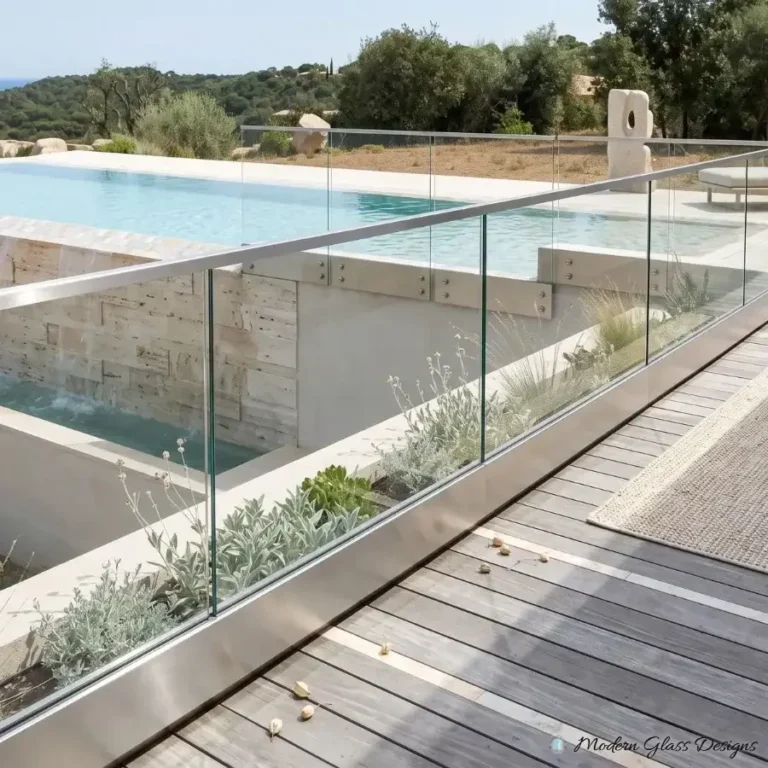
Spigot
The glass is held at the base by short metal clamps, called spigots, fixed to the floor, deck or patio. Spigots are also used for glass pool fences.
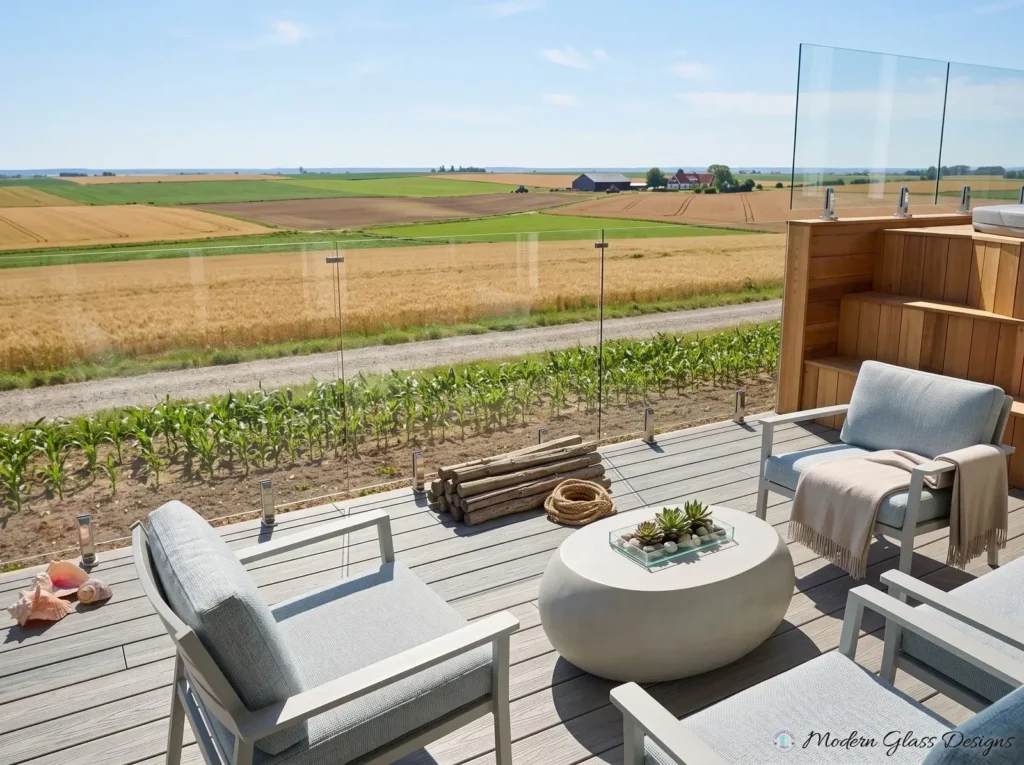
Standoff
The glass is fixed to the side of the stairs or floor edge with round metal standoffs, which keeps the walking surface clear.
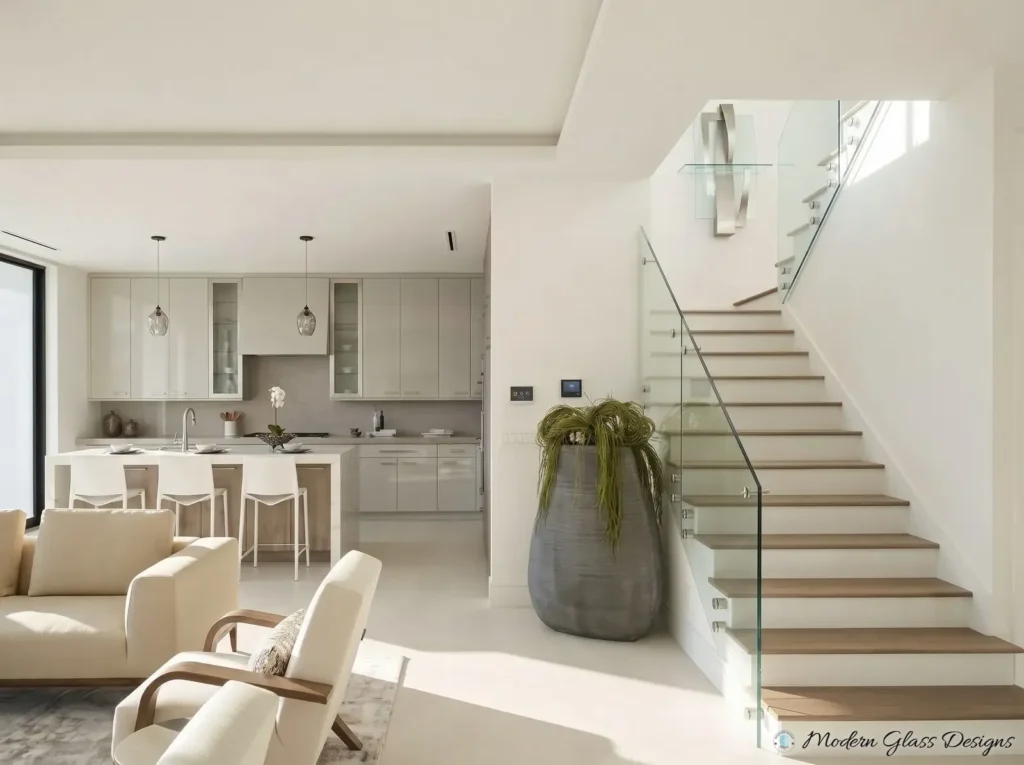
Which system suits a project depends on the stairs, floor or deck, what the railing will be fixed to, and the project’s requirements. We recommend a system after we assess the site.
Inside or outside
Inside the home:
- Staircases, landings and stair openings
- Lofts and interior balconies
- Replacing an old wood or metal stair railing with glass
Outside:
- Decks and raised patios
- Terraces and rooftop decks
- Entry steps and outdoor stairs
- Glass pool fences and gates
Glass, mounting and the top edge
Glass type and thickness, the mounting method and the top-edge options all depend on the selected system and the project’s requirements. Glass options include tempered, laminated and low-iron glass; low-iron glass has less of the green tint that shows along the edges of standard clear glass.
Depending on the system and the project, the top edge may be left as open glass or finished with a metal cap rail or top rail, and stairs can have a metal handrail. We confirm which options suit your railing before we quote.
We take measurements on site, then select the system and glass that suit the project. Many of our recent railing projects use 1/2″ clear tempered glass with hardware made by C.R. Laurence, and finishes we have installed include matte black and stainless steel.
What shapes the price
We don’t publish set prices, because every railing is measured and made for its site. These are the choices that make one railing project different from another:
- How much railing: the total length and the number of glass panels.
- The layout: straight runs compared with corners, angles and stair sections, where panels are made to individual shapes.
- The system: base shoe, spigot or standoff.
- The glass: clear or low-iron, tempered or laminated, and its thickness.
- The top edge: open glass, a cap rail or top rail, and any stair handrail, where the system and project allow.
- Extras: a lighted base shoe, or gates in a pool fence.
- Where it goes: inside or outside, and what the railing is fixed to, such as a floor, stair, deck, patio or pool deck.
Permits and building rules
Requirements such as railing height depend on where the railing is and on local building rules. We don’t pull permits; if your project needs one, the homeowner or the general contractor arranges it.
What to send for a quote
- Photos of the stairs, loft edge, deck or pool area
- Rough lengths of each run, and the number of steps for a staircase
- Whether the railing is inside or outside, and what it will be fixed to
- The system, glass and top edge you like, if you know
We confirm exact sizes when we take measurements on site. Already have a railing with posts? We can also replace the glass panels between existing posts, after checking the existing system.
How a railing project works
- Free consultation. Call, text or send the form, and tell us about your stairs, loft, deck or pool area.
- Site visit and measurements. We take measurements on site and go over the railing system, glass and layout with you.
- Installation. Your glass is made to our measurements and installed by our installation team.
We install glass railings across Northern Virginia, Washington DC and Montgomery County, Maryland. See the options and project photos on our Custom Glass Railings page, or call (703) 595-2999 for a free consultation.